Commutation of My Music Setup (2020-early 2021)
Briefly and with some explanations, I will tell you how the connection scheme of my equipment works.
1. To process guitar and bass guitar signals, I use the correspondingguitar and bass guitar processors Zoom G3N and Zoom B3N.

2. They are equipped with stereo outputs, which I put in a cheap Chinese mixer with no name.

3. Since the mixer has only one stereo input, I put a stereo pair of bass guitar signal into it, and put the guitar cables in two mono inputs and separate them on the mixer as much as possible to the left and right.
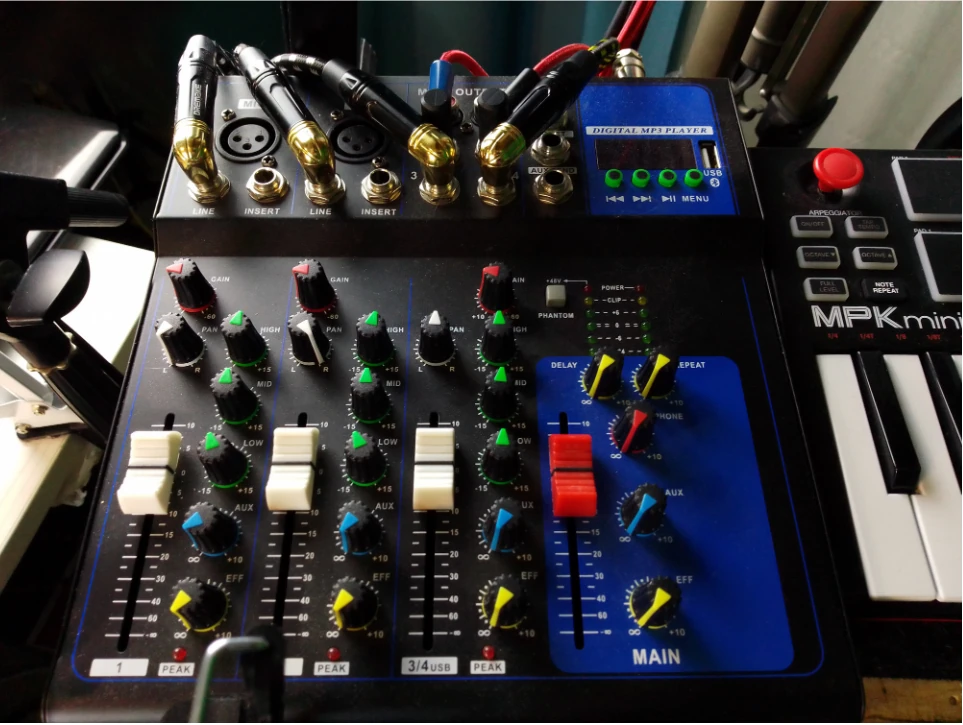
4. I duplicate the settings of the guitar channels. I cut the low frequencies quite a bit to give more space to the bass and also add a little bit of high frequencies for “air”. And then everything goes to the inputs of the RC505 looper.
Technically, when using the RC505, a layer from the mixer is not particularly required: its stereo input can be assigned as two separate mono sources, i.e. for two different instruments. Plus, it can use a separate effect on the Input to pan the signals (in many ways, it is for the panorama mixer and was purchased when there was still a looper RC30 without such rich features). But I decided to leave the mixer in the chain, because the stereo signals from the processors sound more rich and interesting than in mono. And it is also an additional convenient control over the volume and
frequencies (sometimes I throw a little middle for solo).
You can also discuss the fact that this cheap mixer, almost certainly, does not color the sound for
the better, but I did not notice a strong difference (for me, it is much more important that it surprisingly does not make noise), and I did not conduct special measurements and experiments.

5. I process the microphone through an old guitar processor Zoom G2.1u, connecting it through XLR-Jack adapters and also bring it to the looper through the microphone input.

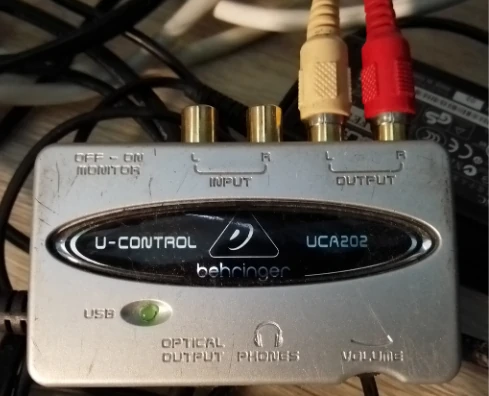
6. For VST-instruments, I use a separate old laptop with a simple sound card of the Behringer UCA-202 and connect it to the looper via the AUX input via the stereo-tulips cable to the stereo-minijack.
7. Looper input CTL 1,2/EXP-this is for connecting the footswitch, which are assigned additional actions with the looper (turn on / off recording, playback, etc.).
The RC505 has a kind of master bus with built-in compression and reverb emulations. I just add a little bit of both to “glue” the mix a little and give space. Next, from the looper, everything goes into the instrumental. inputs of the sound card (gain to zero) Focusrite 4i4 3rd gen.
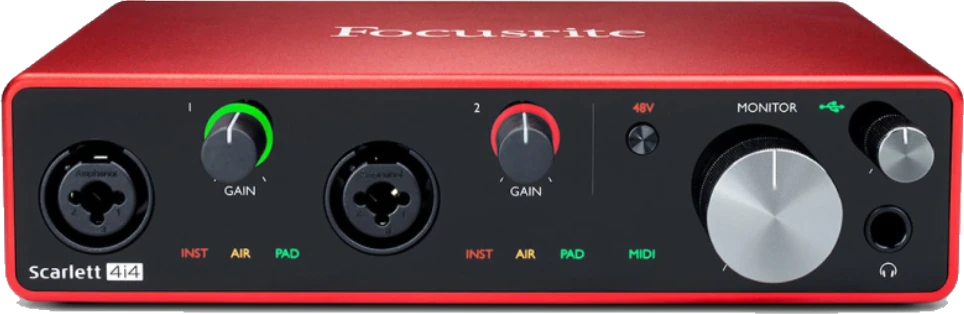
8. In OBS, I add an audio source and add a stereo input 1+2 as a device. To this channel, I add a kind of master bus from Vst plugins through the OBS-filters function. I do not hear this treatment, and it is intended more for the comfort of the listener.
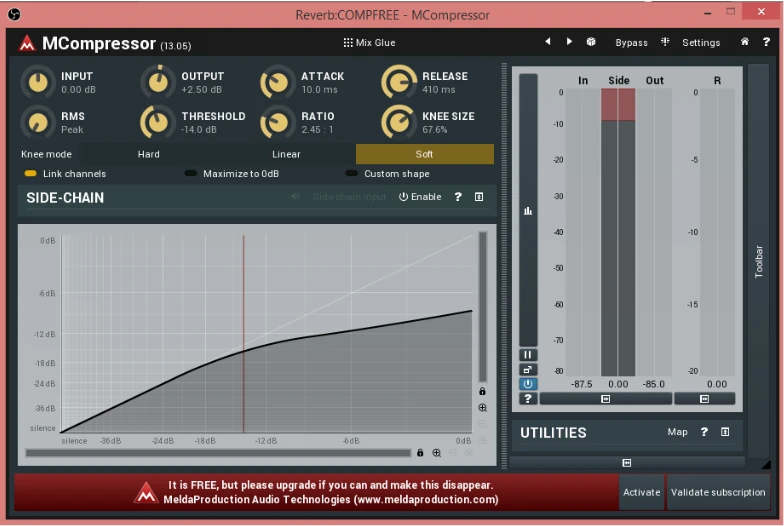
9. First, a little compression, to further tighten the signal. I use the free Mcompressor plugin.
10. Then I use the equalizer to clean up the sub frequencies and add some highs. I use the free Voxengo Marvel GEQ plugin.

11. Next, a free and not very healthy Voxengo Oldskool Reverb to give space to the sound. The impurity is quite small.

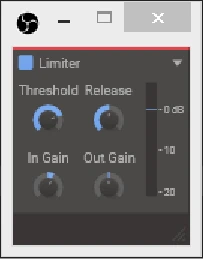
12. So that the stream is not too quiet, at the end I put a free limiter KHS limiter and add in gain +3.5 db and out gain -0.33, so that it does not peak.